Showing posts with label The Internet Age. Show all posts

Monday, 14 April 2014

Optical Camouflage

                               Optical Camouflage(2002)

 Tachi Creates A see-Through Coat

Thanks to japanese research, the twenty-first century soldier may soon be blending invisible into the background. the man behind optical camouflage Susumu Tachi is professor at tokyo University, where he works on the "Science And Technology of artficial reality". ironically, since he now works to make things invisible,tachi previously developed a robotic guide dog for blind
the Optical Camouflage developed by tachi and his research team works by filming the background environment and projecting it into coat worn by the test subject.However,this is no average coat it is covered in thousands of tiny beads that reflect light back to its source, therefore rendering the coat invisible. this is the teory, but in reality the system is still far from perfect and in great need of cutting back on the volume of equipment required.

Segway PT

                             Segway PT

The Segway PT is a two-wheeled, self-balancing, battery-powered electric vehicle invented by Dean Kamen. It is produced by Segway Inc. of New Hampshire, USA. The name Segway is a homophone of the word segue, meaning smooth transition. PT is an abbreviation for personal transporter.
Computers and motors in the base of the device keep the Segway PT upright when powered on with balancing enabled. A user commands the Segway to go forward by shifting their weight forward on the platform, and backward by shifting their weight backward. The Segway detects, as it balances, the change in its center of mass, and first establishes and then maintains a corresponding speed, forward or backward. Gyroscopic sensors and fluid-based leveling sensors detect the weight shift. To turn, the user presses the handlebar to the left or the right.
Segway PTs are driven by electric motors and can reach a speed of 12.5 miles per hour (20.1 km/h).

 Technology

 The dynamics of the Segway PT are similar to a classic control problem, the inverted pendulum. The Segway PT (PT is an initialism for personal transporter while the old suffix HT was an initialism for human transporter) has electric motors powered by Valence Technology phosphate-based lithium-ion batteries, which can be charged from household current. It balances with the help of dual computers that run proprietary software, two tilt sensors, and five gyroscopic sensors developed by BAE Systems' Advanced Technology Centre.The servo drive motors rotate the wheels forwards or backwards as needed for balance or propulsion. The rider controls forward and backward movement by leaning the Segway relative to the combined center of mass of the rider and Segway, by holding the control bar closer to or farther from their body. The Segway detects the change in the balance point, and adjusts the speed at which it is balancing the rider accordingly. On older models, steering is controlled by a twist grip on the left handlebar, which simply varies the speeds between the two motors, rotating the Segway PT (a decrease in the speed of the left wheel would turn the Segway PT to the left). Newer models enable the use of tilting the handle bar to steer.

Stealth Technology

                                      Stealth Technology


Stealth technology also termed LO technology (low observable technology) is a sub-discipline of military tactics and passive electronic countermeasures, which cover a range of techniques used with personnel, aircraft, ships, submarines, missiles and satellites to make them less visible (ideally invisible) to radar, infrared,sonar and other detection methods. It corresponds to camouflage for these parts of the electromagnetic spectrum.
Development in the United States occurred in 1958, where earlier attempts in preventing radar tracking of its U-2 spy planes during the Cold War by the Soviet Union had been unsuccessful.Designers turned to develop a particular shape for planes that tended to reduce detection, by redirecting electromagnetic waves from radars.Radar-absorbent material was also tested and made to reduce or block radar signals that reflect off from the surface of planes. Such changes to shape and surface composition form stealth technology as currently used on the Northrop Grumman B-2 Spirit "Stealth Bomber".The concept of stealth is to operate or hide without giving enemy forces any indications as to the presence of friendly forces. This concept was first explored through camouflage by blending into the background visual clutter. As the potency of detection and interception technologies (radar, IRST, surface-to-air missiles etc.) have increased over time, so too has the extent to which the design and operation of military personnel and vehicles have been affected in response. Some military uniforms are treated with chemicals to reduce their infrared signature. A modern "stealth" vehicle is designed from the outset to have a chosen spectral signature. The degree of stealth embodied in a particular design is chosen according to the predicted threat capabilities.

Internet Protocol

                                        Internet Protocol


The Internet Protocol (IP) is the principal communications protocol in the Internet protocol suite for relaying datagrams across network boundaries. Its routing function enables internetworking, and essentially establishes the Internet.
IP, as the primary protocol in the Internet layer of the Internet protocol suite, has the task of delivering packets from the source host to the destination host solely based on the IP addresses in the packet headers. For this purpose, IP defines packet structures that encapsulate the data to be delivered. It also defines addressing methods that are used to label the datagram with source and destination information.
Historically, IP was the connectionless datagram service in the original Transmission Control Program introduced by Vint Cerf and Bob Kahn in 1974; the other being the connection-oriented Transmission Control Protocol (TCP). The Internet protocol suite is therefore often referred to as TCP/IP.
The first major version of IP, Internet Protocol Version 4 (IPv4), is the dominant protocol of the Internet. Its successor is Internet Protocol Version 6 (IPv6).

Laser Cooling Of Atoms

                            Laser Cooling Of Atoms

Laser cooling refers to a number of techniques in which atomic and molecular samples are cooled down to near absolute zero through the interaction with one or more laser fields.

The first example of laser cooling, and also still the most common method (so much so that it is still often referred to simply as 'laser cooling') is Doppler cooling. Other methods of laser cooling include:
  • Sisyphus cooling
  • Resolved sideband cooling
  • Velocity selective coherent population trapping (VSCPT)
  • Anti-Stokes inelastic light scattering (typically in the form of fluorescence or Raman scattering)
  • Cavity mediated cooling
  • Sympathetic cooling
  • Use of a Zeeman slower

How it works

A laser photon hits the atom and causes it to emit photons of a higher average energy than the one it absorbed from the laser. The energy difference comes from thermal excitations within the atoms, and this heat from the thermal excitation is converted into light which then leaves the atom as a photon. This can also be seen from the perspective of the law of conservation of momentum. When an atom is traveling towards a laser beam and a photon from the laser is absorbed by the atom, the momentum of the atom is reduced by the amount of momentum of the photon it absorbed.
Δp/p = pphoton/mv = Δv/v
Δv = pphoton/m
Momentum of the photon is: p = E/c = h/λ
Suppose you are floating on a hovercraft, moving with a significant velocity in one direction (due north, for example). Heavy metallic balls are being thrown at you from all four directions (front, back, left, and right), but you can only catch the balls that are coming from directly in front of you. If you were to catch one of these balls, you would slow down due to the conservation of momentum. Eventually, however, you must throw the ball away, but the direction in which you throw the ball away is completely random. Due to conservation of momentum, throwing the ball away will increase your velocity in the direction opposite the ball's. However, since the "throw-away" direction is random, this contribution to your velocity will vanish on average. Therefore your forward velocity will decrease (due to preferentially catching the balls in front) and eventually your movements will entirely be dictated by the recoil effect of catching and throwing the balls.ηcooling = Pcooling/Pelectric
ηcooling = cooling efficiency
Pcooling = cooling power in the active material
Pelectric = input electric power to the pump light source
h/λ = p = mv
h = Planck's constant (h = 6.626∙〖10〗(-34) J∙s)
λ = de Broglie's wavelength
p = momentum of the atom
m = mass of the atom
v = velocity of the atom
Example: λ = h/mv = λphoton/x
x = number of photons needed to stop the momentum of an atom with mass m and at velocity v
Na atom
mNa = 3.818∙〖10〗(-26) kg/atom
vNa ≈ 300meters/second
λphoton = 600 nm
λphoton/x = h/(mNa vNa ) ⟹ x = 10372
Conclusion: A total of 10372 photons are needed to stop the momentum of one sodium atom with a velocity of about 300 m/s. Experiments in laser cooling have yielded a number of 10^7 photons to be emitted from a laser per second. This sodium atom could be stopped in space in just a matter of 1 millisecond.
 How To:


Supercomputer

                        Supercomputer


A supercomputer is a computer at the frontline of contemporary processing capacity – particularly speed of calculation which can happen at speeds of nanoseconds.
Supercomputers were introduced in the 1960s, made initially and, for decades, primarily by Seymour Cray at Control Data Corporation (CDC), Cray Research and subsequent companies bearing his name or monogram. While the supercomputers of the 1970s used only a few processors, in the 1990s machines with thousands of processors began to appear and, by the end of the 20th century, massively parallel supercomputers with tens of thousands of "off-the-shelf" processors were the norm. As of November 2013, China's Tianhe-2 supercomputer is the fastest in the world at 33.86 petaFLOPS, or 33.86 quadrillion floating point operations per second.
Systems with massive numbers of processors generally take one of two paths: In one approach (e.g., in distributed computing), a large number of discrete computers (e.g., laptops) distributed across a network (e.g., the Internet) devote some or all of their time to solving a common problem; each individual computer (client) receives and completes many small tasks, reporting the results to a central server which integrates the task results from all the clients into the overall solution. In another approach, a large number of dedicated processors are placed in close proximity to each other (e.g. in a computer cluster); this saves considerable time moving data around and makes it possible for the processors to work together (rather than on separate tasks), for example in mesh and hypercube architectures.
The use of multi-core processors combined with centralization is an emerging trend; one can think of this as a small cluster (the multicore processor in a smartphone, tablet, laptop, etc.) that both depends upon and contributes to the cloud.
Supercomputers play an important role in the field of computational science, and are used for a wide range of computationally intensive tasks in various fields, including quantum mechanics, weather forecasting, climate research, oil and gas exploration, molecular modeling (computing the structures and properties of chemical compounds, biological macromolecules, polymers, and crystals), and physical simulations (such as simulations of the early moments of the universe, airplane and spacecraft aerodynamics, the detonation of nuclear weapons, and nuclear fusion). Throughout their history, they have been essential in the field of cryptanalysis.


Digital Audio Tape

                    Digital Audio Tape


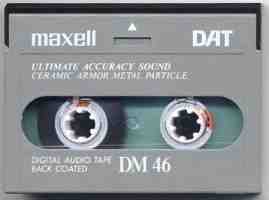
Digital Audio Tape (DAT or R-DAT) is a signal recording and playback medium developed by Sony and introduced in 1987. In appearance it is similar to a Compact Cassette, using 4 mm magnetic tape enclosed in a protective shell, but is roughly half the size at 73 mm × 54 mm × 10.5 mm. As the name suggests, the recording is digital rather than analog. DAT has the ability to record at higher, equal or lower sampling rates than a CD (48, 44.1 or 32 kHz sampling rate respectively) at 16 bits quantization. If a digital source is copied then the DAT will produce an exact clone, unlike other digital media such as Digital Compact Cassette or non-Hi-MD MiniDisc, both of which use a lossy data reduction system.
Like most formats of videocassette, a DAT cassette may only be recorded and played in one direction, unlike an analog compact audio cassette.
Although intended as a replacement for audio cassettes, the format was never widely adopted by consumers because of issues of expense and concerns from the music industry about unauthorized digital quality copies. The format saw moderate success in professional markets and as a computer storage medium. As Sony has ceased production of new recorders, it will become more difficult to play archived recordings in this format unless they are copied to other formats or hard drives.

Uses of DAT

Professional recording industry

DAT was used professionally in the 1990s by the professional audio recording industry as part of an emerging all-digital production chain also including digital multi-track recorders and digital mixing consoles that was used to create a fully digital recording. In this configuration, it is possible for the audio to remain digital from the first AD converter after the mic preamp until it is in a CD player.

Pre-recorded DAT

In May 1988, Wire's album The Ideal Copy became the first popular music recording to be commercially released on DAT format. Several other albums from multiple record labels were also released as pre-recorded DAT tapes in the first few years of the format's existence, in small quantities as well.

Amateur and home use

DAT was envisaged by proponents as the successor format to analogue audio cassettes in the way that the compact disc was the successor to vinyl-based recordings. It sold well in Japan, where high-end consumer audio stores stocked DAT recorders and tapes into the 2010s and second-hand stores generally continued to offer a wide selection of mint condition machines. However, there and in other nations, the technology was never as commercially popular as CD or cassette. DAT recorders proved to be comparatively expensive and few commercial recordings were available. Globally, DAT remained popular, for a time, for making and trading recordings of live music (see bootleg recording), since available DAT recorders predated affordable CD recorders.

Computer data storage medium

The format was designed for audio use, but through the ISO Digital Data Storage standard was adopted for general data storage, storing from 1.3 to 80 GB on a 60 to 180 meter tape depending on the standard and compression. It is a sequential-access medium and is commonly used for backups. Due to the higher requirements for capacity and integrity in data backups, a computer-grade DAT was introduced, called DDS (Digital Data Storage). Although functionally similar to audio DATs, only a few DDS and DAT drives (in particular, those manufactured by Archive for SGI workstations) are capable of reading the audio data from a DAT cassette. SGI DDS4 drives no longer have audio support; SGI removed the feature due to "lack of demand".

Electronic Paper

                                    Electronic Paper


Electronic paper, e-paper and electronic ink are display technologies which are designed to mimic the appearance of ordinary ink on paper.Unlike conventional backlit flat panel displays which emit light, electronic paper displays reflect light like ordinary paper, theoretically making it more comfortable to read, and giving the surface a wider viewing angle compared to conventional displays. The contrast ratio in available displays as of 2008 might be described as similar to that of newspaper, though newly developed displays are slightly better. An ideal e-paper display can be read in direct sunlight without the image appearing to fade.
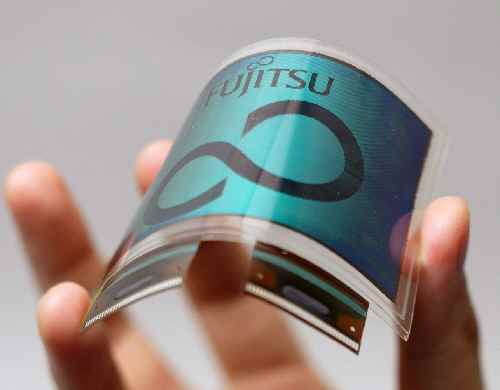
Many electronic paper technologies can hold static text and images indefinitely without using electricity. Flexible electronic paper uses plastic substrates and plastic electronics for the display backplane. There is ongoing competition among manufacturers to provide full-color ability.
Applications of electronic visual displays include electronic pricing labels in retail shops, and digital signage, time tables at bus stations, electronic billboards,mobile phone displays, and e-readers able to display digital versions of books and e-paper magazines.

Disadvantages

Electronic paper technologies have a very low refresh rate compared to other low-power display technologies, such as LCD. This prevents producers from implementing sophisticated interactive applications (using fast moving menus, mouse pointers or scrolling) like those which are possible on mobile devices. An example of this limit is that a document cannot be smoothly zoomed without either extreme blurring during the transition or a very slow zoom.
An e-ink screen showing the "ghost" of a prior image
Another limit is that a shadow of an image may be visible after refreshing parts of the screen. Such shadows are termed "ghost images", and the effect is termed "ghosting". This effect is reminiscent of screen burn-in but, unlike it, is solved after the screen is refreshed several times. Turning every pixel white, then black, then white, helps normalize the contrast of the pixels. This is why several devices with this technology "flash" the entire screen white and black when loading a new image.

No company has yet successfully brought a full color display to market.
Electronic paper is still a topic in the R&D community and remains under development for manufacturability, marketability, and reliability considerations.

C programming language

                               C programming language


In computing, C (/ˈs/, as in the letter C) is a general-purpose programming language initially developed by Dennis Ritchie between 1969 and 1973 at AT&T Bell Labs. Like most imperative languages in the ALGOL tradition, C has facilities for structured programming and allows lexical variable scope and recursion, while a static type system prevents many unintended operations. Its design provides constructs that map efficiently to typical machine instructions, and therefore it has found lasting use in applications that had formerly been coded in assembly language, most notably system software like the Unix computer operating system.
C is one of the most widely used programming languages of all time, and C compilers are available for the majority of available computer architectures and operating systems.
Many later languages have borrowed directly or indirectly from C, including D, Go, Rust, Java, JavaScript, Limbo, LPC, C#, Objective-C, Perl, PHP, Python, Verilog (hardware description language), and Unix's C shell. These languages have drawn many of their control structures and other basic features from C. Most of them (with Python being the most dramatic exception) are also very syntactically similar to C in general, and they tend to combine the recognizable expression and statement syntax of C with underlying type systems, data models, and semantics that can be radically different. C++ and Objective-C started as compilers that generated C code; C++ is currently nearly a superset of C, while Objective-C is a strict superset of C.
Before there was an official standard for C, many users and implementors relied on an informal specification contained in a book by Dennis Ritchie and Brian Kernighan; that version is generally referred to as "K&R" C. In 1989 the American National Standards Institute published a standard for C (generally called "ANSI C" or "C89"). The next year, the same specification was approved by the International Organization for Standardization as an international standard (generally called "C90"). ISO later released an extension to the internationalization support of the standard in 1995, and a revised standard (known as "C99") in 1999. The current version of the standard (now known as "C11") was approved in December 2011.

Computerized Telephone Exchange

                    Computerized Telephone Exchange (1971)

Sunday, 13 April 2014

Food processor

                                        Food processor


A food processor is a kitchen appliance used to facilitate repetitive tasks in the preparation of food. Today, the term almost always refers to an electric-motor-driven appliance, although there are some manual devices also referred to as "food processors".
Food processors are similar to blenders in many ways. The primary difference is that food processors use interchangeable blades and disks (attachments) instead of a fixed blade. Also, their bowls are wider and shorter, a more appropriate shape for the solid or semi-solid foods usually worked in a food processor. Usually, little or no liquid is required in the operation of the food processor, unlike a blender, which requires some amount of liquid to move the particles around the blade.


Functions

Food processors normally have multiple functions, depending on the placement and type of attachment or blade. These functions normally consist of:
  • Slicing/chopping vegetables
  • Grinding items such as nuts, seeds (e.g. spices), meat, or dried fruit
  • Shredding or grating cheese or vegetables
  • Pureeing
  • Mixing and kneading doughs

X-ray computed tomography

                                 X-ray computed tomography


X-ray computed tomography (x-ray CT) is a technology that uses computer-processed x-rays to produce tomographic images (virtual 'slices') of specific areas of the scanned object, allowing the user to see what is inside it without cutting it open. Digital geometry processing is used to generate a three-dimensional image of the inside of an object from a large series of two-dimensional radiographic images taken around a single axis of rotation.Medical imaging is the most common application of x-ray CT. Its cross-sectional images are used for diagnostic and therapeutic purposes in various medical disciplines. The rest of this article discusses medical-imaging x-ray CT; industrial applications of x-ray CT are discussed at industrial computed tomography scanning.
As x-ray CT is the most common form of CT in medicine and various other contexts, the term computed tomography alone (or CT) is often used to refer to x-ray CT, although other types exist (such as positron emission tomography [PET] and single-photon emission computed tomography [SPECT]). Older and less preferred terms that also refer to x-ray CT are computed axial tomography (CAT scan) and computer-assisted tomography. X-ray CT is a form of radiography, although the word "radiography" used alone usually refers, by wide convention, to non-tomographic radiography.

CT produces a volume of data that can be manipulated in order to demonstrate various bodily structures based on their ability to block the x-ray beam. Although, historically, the images generated were in the axial or transverse plane, perpendicular to the long axis of the body, modern scanners allow this volume of data to be reformatted in various planes or even as volumetric (3D) representations of structures. Although most common in medicine, CT is also used in other fields, such as nondestructive materials testing. Another example is archaeological uses such as imaging the contents of sarcophagi. Individuals responsible for performing CT exams are called radiologic technologists or radiographers and are required to be licensed in most states of the USA.
Usage of CT has increased dramatically over the last two decades in many countries.An estimated 72 million scans were performed in the United States in 2007. One study estimated that as many as 0.4% of current cancers in the United States are due to CTs performed in the past and that this may increase to as high as 1.5 to 2% with 2007 rates of CT usage; however, this estimate is disputed.,as there is not a scientific consensus about the existance of damage from low-levels of radiation. Kidney problems following intravenous contrast agents may also be a concern in some types of studies.
 See The Video Below:

Genetically Modified Organisms

                            Genetically Modified Organisms


A genetically modified organism (GMO) is an organism whose genetic material has been altered using genetic engineering techniques. Organisms that have been genetically modified include micro-organisms such as bacteria and yeast, insects, plants, fish, and mammals. GMOs are the source of genetically modified foods, and are also widely used in scientific research and to produce goods other than food. The term GMO is very close to the technical legal term, 'living modified organism' defined in the Cartagena Protocol on Biosafety, which regulates international trade in living GMOs (specifically, "any living organism that possesses a novel combination of genetic material obtained through the use of modern biotechnology").
This article focuses on what organisms have been genetically engineered, and for what purposes. The article on genetic engineering focuses on the history and methods of genetic engineering, and on applications of genetic engineering and of GMOs. Both articles cover much of the same ground but with different organizations (sorted by organism in this article; sorted by application in the other). There are separate articles on genetically modified crops, genetically modified food, regulation of the release of genetic modified organisms, and controversies.


Production

Genetic modification involves the mutation, insertion, or deletion of genes. When genes are inserted, they usually come from a different species, which is a form of horizontal gene transfer. In nature this can occur when exogenous DNA penetrates the cell membrane for any reason. To do this artificially may require attaching the genes to a virus or just physically inserting the extra DNA into the nucleus of the intended host with a very small syringe, with the use of electroporation (that is, introducing DNA from one organism into the cell of another by use of an electric pulse) or with very small particles fired from a gene gun. However, other methods exploit natural forms of gene transfer, such as the ability of Agrobacterium to transfer genetic material to plants, or the ability of lentiviruses to transfer genes to animal cells
                      Detailed GMO VIDEO:

Floppy disk

                             Floppy disk


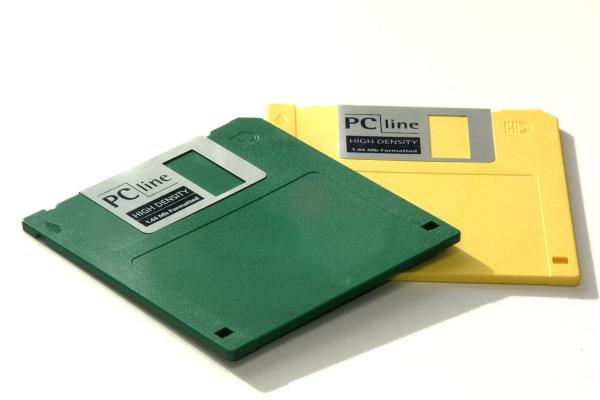
A floppy disk, or diskette, is a disk storage medium composed of a disk of thin and flexible magnetic storage medium, sealed in a rectangular plastic carrier lined with fabric that removes dust particles. Floppy disks are read and written by a floppy disk drive (FDD).
Floppy disks, initially as 8-inch (200 mm) media and later in 5¼-inch (133 mm) and 3½-inch (90 mm) sizes, were a ubiquitous form of data storage and exchange from the mid-1970s well into the 2000s.
By 2010, computer motherboards were rarely manufactured with floppy drive support; 3½-inch floppy disks can be used with an external USB floppy disk drive, but USB drives for 5¼-inch, 8-inch and non-standard diskettes are rare or non-existent, and those formats must usually be handled by old equipment.
While floppy disk drives still have some limited uses, especially with legacy industrial computer equipment, they have been superseded by data storage methods with much greater capacity, such as USB flash drives, portable external hard disk drives, optical discs, memory cards and computer networks.

 Operation

A spindle motor in the drive rotates the magnetic medium at a certain speed, while a stepper motor-operated mechanism moves the magnetic read/write head(s) along the surface of the disk. Both read and write operations require the media to be rotating and the head to contact the disk media, an action accomplished by a "disk load" solenoid. To write data, current is sent through a coil in the head as the media rotates. The head's magnetic field aligns the magnetic particles directly below the head on the media. When the current is reversed the particles align in the opposite direction encoding the data digitally. To read data, the magnetic particles in the media induce a tiny voltage in the head coil as they pass under it. This small signal is amplified and sent to the floppy disk controller, which converts the streams of pulses from the media into data, checks it for errors, and sends it to the host computer system.
A blank "unformatted" diskette has a coating of magnetic oxide with no magnetic order to the particles. During formatting, the particles are aligned forming a pattern of magnetized tracks, each broken up into sectors, enabling the controller to properly read and write data. The tracks are concentric rings around the center, with spaces between tracks where no data is written; gaps with padding bytes are provided between the sectors and at the end of the track to allow for slight speed variations in the disk drive, and to permit better interoperability with disk drives connected to other similar systems. Each sector of data has a header that identifies the sector location on the disk. A cyclic redundancy check (CRC) is written into the sector headers and at the end of the user data so that the disk controller can detect potential errors. Some errors are soft and can be resolved by automatically re-trying the read operation; other errors are permanent and the disk controller will signal a failure to the operating system if multiple attempts to read the data still fail.
After a disk is inserted, a catch or lever at the front of the drive is manually lowered to prevent the disk from accidentally emerging, engage the spindle clamping hub, and in two-sided drives, engage the second read/write head with the media. In some 5¼-inch drives, insertion of the disk compresses and locks an ejection spring which partially ejects the disk upon opening the catch or lever. This enables a smaller concave area for the thumb and fingers to grasp the disk during removal. Newer 5¼-inch drives and all 3½-inch drives automatically engage the spindle and heads when a disk is inserted, doing the opposite with the press of the eject button. On Apple Macintosh computers with built-in floppy drives, the ejection button is replaced by software controlling an eject motor which only does so when the operating system no longer needs to access the drive. The user could drag the image of the floppy drive to the trash can on the desktop to eject the disk. In the case of a power failure or drive malfunction, a loaded disk can be removed manually by inserting a straightened paper clip into a small hole at the drive's front panel, just as one would do with a CD-ROM drive in a similar situation.
See This Video:


Computer Laser Printer

                             Computer Laser Printer


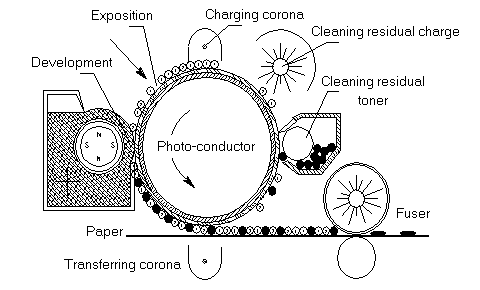
Laser printing is an electrostatic digital printing process that rapidly produces high quality text and graphics by passing a laser beam over a charged drum to define a differentially charged image. The drum then selectively collects charged toner and transfers the image to paper, which is then heated to permanently fix the image. As with digital photocopiers and multifunction printers (MFPs), laser printers employ a xerographic printing process, but differ from analog photocopiers in that the image is produced by the direct scanning of the medium across the printer's photoreceptor. Hence, it proves to be a much faster process compared to the latter.

Printing Process

1. The Cleaning phase cleans up the work from the previous page to prepare the Drum for printing a new page.

2. The second phase involves the Primary Corona wire. Primary meaning “first” is the first of two Coronas being used. The Primary Corona applies a uniform negative charge to the Drum.

3. Next, the Laser writes an electrical representation on the Drum of the image that will be printed.

4. During the Developing phase, Toner is applied electrically to the areas on the Drum that were written by the Laser.

5. Next, the Paper becomes part of the process. The Transfer Corona wire applies a positive charge to the Paper that pulls the negative charged Toner onto the Paper.

6. Finally, during the Fusing phase, the heat and pressure rollers melt the Toner particles into the Paper. The printed paper will be temporarily warm to the touch as the result of the Fusing phase.

These 6 phases are repeated for every page that is printed.

The magic remains, but the process is understood.


See The Below Video To Understand The Printing Process Briefly:


Computer-Aided Manufacturing

             Computer-Aided Manufacturing(1971)


 Computer-aided manufacturing (CAM) is the use of computer software to control machine tools and related machinery in the manufacturing of workpieces. This is not the only definition for CAM, but it is the most common; CAM may also refer to the use of a computer to assist in all operations of a manufacturing plant, including planning, management, transportation and storage. Its primary purpose is to create a faster production process and components and tooling with more precise dimensions and material consistency, which in some cases, uses only the required amount of raw material (thus minimizing waste), while simultaneously reducing energy consumption. CAM is now a system used in schools and lower educational purposes . CAM is a subsequent computer-aided process after computer-aided design (CAD) and sometimes computer-aided engineering (CAE), as the model generated in CAD and verified in CAE can be input into CAM software, which then controls the machine tool.


Radio-frequency identification

               Radio-frequency identification


Radio-frequency identification (RFID) is the wireless non-contact use of radio-frequency electromagnetic fields to transfer data, for the purposes of automatically identifying and tracking tags attached to objects. The tags contain electronically stored information. Some tags are powered by and read at short ranges (a few meters) via magnetic fields (electromagnetic induction). Others use a local power source such as a battery, or else have no battery but collect energy from the interrogating EM field, and then act as a passive transponder to emit microwaves or UHF radio waves (i.e., electromagnetic radiation at high frequencies). Battery powered tags may operate at hundreds of meters. Unlike a bar code, the tag does not necessarily need to be within line of sight of the reader, and may be embedded in the tracked object.
Radio frequency identification (RFID) is part of the family of Automatic Identification and Data Capture (AIDC) technologies that includes 1D and 2D bar codes. RFID uses an electronic chip, usually applied to a substrate to form a label, that is affixed to a product, case, pallet or other package. The information it contains may be read, recorded, or rewritten.
RFID tags are used in many industries. An RFID tag attached to an automobile during production can be used to track its progress through the assembly line. Pharmaceuticals can be tracked through warehouses. Livestock and pets may have tags injected, allowing positive identification of the animal.
Since RFID tags can be attached to cash, clothing, everyday possessions, or even implanted within people, the possibility of reading personally-linked information without consent has raised serious privacy concerns.

Pocket Calculator

                                     Pocket Calculator

By 1970, a calculator could be made using just a few chips of low power consumption, allowing portable models powered from rechargeable batteries. The first portable calculators appeared in Japan in 1970, and were soon marketed around the world. These included the Sanyo ICC-0081 "Mini Calculator", the Canon Pocketronic, and the Sharp QT-8B "micro Compet". The Canon Pocketronic was a development of the "Cal-Tech" project which had been started at Texas Instruments in 1965 as a research project to produce a portable calculator. The Pocketronic has no traditional display; numerical output is on thermal paper tape. As a result of the "Cal-Tech" project, Texas Instruments was granted master patents on portable calculators.
Sharp put in great efforts in size and power reduction and introduced in January 1971 the Sharp EL-8, also marketed as the Facit 1111, which was close to being a pocket calculator. It weighed about 455 grams or one pound, had a vacuum fluorescent display, rechargeable NiCad batteries, and initially sold for $395.
However, the efforts in integrated circuit development culminated in the introduction in early 1971 of the first "calculator on a chip", the MK6010 by Mostek, followed by Texas Instruments later in the year. Although these early hand-held calculators were very expensive, these advances in electronics, together with developments in display technology (such as the vacuum fluorescent display, LED, and LCD), led within a few years to the cheap pocket calculator available to all.
In 1971 Pico Electronics. and General Instrument also introduced their first collaboration in ICs, a complete single chip calculator IC for the Monroe Royal Digital III calculator. Pico was a spinout by five GI design engineers whose vision was to create single chip calculator ICs. Pico and GI went on to have significant success in the burgeoning handheld calculator market.
The first truly pocket-sized electronic calculator was the Busicom LE-120A "HANDY", which was marketed early in 1971. Made in Japan, this was also the first calculator to use an LED display, the first hand-held calculator to use a single integrated circuit (then proclaimed as a "calculator on a chip"), the Mostek MK6010, and the first electronic calculator to run off replaceable batteries. Using four AA-size cells the LE-120A measures 4.9x2.8x0.9 in (124x72x24 mm).
The first American-made pocket-sized calculator, the Bowmar 901B (popularly referred to as The Bowmar Brain), measuring 5.2 × 3.0 × 1.5 in (131 × 77 × 37 mm), came out in the Autumn of 1971, with four functions and an eight-digit red LED display, for $240, while in August 1972 the four-function Sinclair Executive became the first slimline pocket calculator measuring 5.4 × 2.2 × 0.35 in (138 × 56 × 9 mm) and weighing 2.5 oz (70g). It retailed for around £79. By the end of the decade, similar calculators were priced less than £5.
The first Soviet-made pocket-sized calculator, the "Elektronika B3-04" was developed by the end of 1973 and sold at the beginning of 1974.
One of the first low-cost calculators was the Sinclair Cambridge, launched in August 1973. It retailed for £29.95, or £5 less in kit form. The Sinclair calculators were successful because they were far cheaper than the competition; however, their design led to slow and inaccurate computations of transcendental functions.
Meanwhile Hewlett Packard (HP) had been developing a pocket calculator. Launched in early 1972 it was unlike the other basic four-function pocket calculators then available in that it was the first pocket calculator with scientific functions that could replace a slide rule. The $395 HP-35, along with nearly all later HP engineering calculators, used reverse Polish notation (RPN), also called postfix notation. A calculation like "8 plus 5" is, using RPN, performed by pressing "8", "Enter↑", "5", and "+"; instead of the algebraic infix notation: "8", "+", "5", "=".
The first Soviet scientific pocket-sized calculator the "B3-18" was completed by the end of 1975.
In 1973, Texas Instruments (TI) introduced the SR-10, (SR signifying slide rule) an algebraic entry pocket calculator using scientific notation for $150. Shortly after the SR-11 featured an additional key for entering "π". It was followed the next year by the SR-50 which added log and trig functions to compete with the HP-35, and in 1977 the mass-marketed TI-30 line which is still produced.
In 1978 a new company, Calculated Industries, came onto the scene, focusing on specific markets. Their first calculator, the Loan Arranger  (1978) was a pocket calculator marketed to the Real Estate industry with preprogrammed functions to simplify the process of calculating payments and future values. In 1985, CI launched a calculator for the construction industry called the Construction Master  which came preprogrammed with common construction calculations (such as angles, stairs, roofing math, pitch, rise, run, and feet-inch fraction conversions). This would be the first in a line of construction related calculators.

Holographic Memory

                                  Holographic Memory


Holographic data storage is a potential technology in the area of high-capacity data storage currently dominated by magnetic and conventional optical data storage. Magnetic and optical data storage devices rely on individual bits being stored as distinct magnetic or optical changes on the surface of the recording medium. Holographic data storage records information throughout the volume of the medium and is capable of recording multiple images in the same area utilizing light at different angles.
Additionally, whereas magnetic and optical data storage records information a bit at a time in a linear fashion, holographic storage is capable of recording and reading millions of bits in parallel, enabling data transfer rates greater than those attained by traditional optical storage.


Recording data

Holographic data storage contains information using an optical interference pattern within a thick, photosensitive optical material. Light from a single laser beam is divided into two separate optical patterns of dark and light pixels. By adjusting the reference beam angle, wavelength, or media position, a multitude of holograms (theoretically, several thousand) can be stored on a single volume.

Reading data

The stored data is read through the reproduction of the same reference beam used to create the hologram. The reference beam's light is focused on the photosensitive material, illuminating the appropriate interference pattern, the light diffracts on the interference pattern, and projects the pattern onto a detector. The detector is capable of reading the data in parallel, over one million bits at once, resulting in the fast data transfer rate. Files on the holographic drive can be accessed in less than 0.2 seconds.

Longevity

Holographic data storage can provide companies a method to preserve and archive information. The write-once, read many (WORM) approach to data storage would ensure content security, preventing the information from being overwritten or modified. Manufacturers believe this technology can provide safe storage for content without degradation for more than 50 years, far exceeding current data storage options. Counterpoints to this claim are that the evolution of data reader technology has – in the last couple of decades – changed every ten years. If this trend continues, it therefore follows that being able to store data for 50–100 years on one format is irrelevant, because you would migrate the data to a new format after only ten years. However, claimed longevity of storage has, in the past, proven to be a key indicator of shorter-term reliability of storage media. Current optical formats – such as CD – have largely lived up to the original longevity claims (where reputable media makes are used) and have proved to be more reliable shorter-term data carriers than the floppy disk and DAT media they displaced.

Cellular Mobile Phone


A mobile phone (also known as a cellular phone, cell phone, and a hand phone) is a phone that can make and receive telephone calls over a radio link while moving around a wide geographic area. It does so by connecting to a cellular network provided by a mobile phone operator, allowing access to the public telephone network. By contrast, a cordless telephone is used only within the short range of a single, private base station.
In addition to telephony, modern mobile phones also support a wide variety of other services such as text messaging, MMS, email, Internet access, short-range wireless communications (infrared, Bluetooth), business applications, gaming and photography. Mobile phones that offer these and more general computing capabilities are referred to as smartphones.
The first hand-held cell phone was demonstrated by John F. Mitchell and Dr Martin Cooper of Motorola in 1973, using a handset weighing around 2.2 pounds (1 kg). In 1983, the DynaTAC 8000x was the first to be commercially available. From 1990 to 2011, worldwide mobile phone subscriptions grew from 12.4 million to over 6 billion, penetrating about 87% of the global population and reaching the bottom of the economic pyramid.


© 2013. All rights resevered. Share on

Call of Duty Black Ops 15th Prestige Google+